Nano pore technology makes cost effective water production
Written by Nicholas PappThe Arcada University of Applied Sciences in Helsinki successfully produces nano-sized pores to cut water production costs. Dr. Mikael Paronen, head of the Department of Energy and Materials Technology, claims that this nano pore technology could be globally significant in making clean water available.
March 22 is World Water Day, and this year the celebration focuses on The Year of International Water Cooperation. UN Water reminds us that rivers often flow through multiple countries, and actions by one country or community can affect their neighbors’ ability to meet their water needs. Consuming too much water, or polluting a shared body of water, can make it hard for others to have enough for drinking, hygiene, agriculture, ecosystem health, and other needs.
Environmental-friendly reverse osmosis (RO) systems demand increases
Written by Nicholas PappWater Technology magazine reports that many customers in both the laboratory and industrial sectors are now looking for sustainable options when it comes to water treatment, including reverse osmosis (RO) systems.Professionals cannot dispute RO’s effectiveness, but they are also aware of the technology’s drawbacks, such as high energy requirements, and product water to wastewater ratio.
Demand for high purity water boosts membrane and RO systems market
Written by Nicholas PappBusiness consulting firm Frost & Sullivan held a web conference last March 13 discussing the increasing penetration of membrane technologies, including reverse osmosis (RO), microfiltration, ultrafiltration and nanofiltration. Research analyst Paulina Szyplinska lead the event and explained how membrane filtration systems can address global water challenges by ensuring high quality supply to the laboratory, industrial and even the global population.
Ultrapure Water World Market Will Exceed $468 Million In Revenue This Year
Written by Nicholas PappMarket research firm McIlvaine Company concludes in a recent study that various industries all over the world will contribute to generating over $468 million in ultrapure water systems and instruments sales for 2013.
There will be a growth in revenue for ultrapure water purification systems, instruments and even controls this year as electronics, power, scientific and laboratory industries continually demand for ultrapure water.
Rochester Waste Management to address wastewater treatment issues with RO system
Written by Nicholas PappThe Turnkey Landfill of Rochester under the city's Waste Management will be using a reverse osmosis (RO) system to address the wastewater treatment plant problems, including the low transmissivity levels in the water as well as the significant amount of nitrogen passing through the city's plant. The upgrades are expected to be completed summer of 2013.
A reverse osmosis (RO) system will be implemented for the treatment of leachate — the precipitation and melted snow that filters through the landfill waste and collects on the bottom. After the leachate is pretreated at Waste Management, it travels to the city's wastewater treatment plant, where it's treated and then discharged into the Cocheco River. Aqua Solutions offer various options in RO pretreatment to meet both laboratory and industrial requirements similar to this.
Aqua Solutions releases Programmable Remote Dispenser for easy deionized water measurement
Written by Nicholas PappAqua Solutions recently released the Programmable Remote Dispenser 2700PRD for the easy and quick delivery of measured volume of deionized water. The dispenser is designed for use on new and existing Aqua Solutions water purification systems, and can be customized for operation on other systems.
The Programmable Remote Dispenser delivers precise, measured volume of deionized water at the press of a button. After selecting a volume, the operator simply pushes a button to deliver the required amount.
The 2700PRD dispenser is manufactured for repeat operation as its easy-to-select volume is retained in the equipment's non-volatile memory. It also offers versatility with its volume range of 0.1 liters to 100 liters, which can be selected in increments of 0.01 liters. The dispenser will accurately measure volumes over a flow rate range of 0.6 Liters/minute to 5 Liters/minute.
IDA to launch online reverse osmosis (RO) certification program
Written by Nicholas PappThe International Desalination Association (IDA) will be launching the online IDA Reverse Osmosis Certification (IROC) Program in collaboration with David H. Paul, Inc. (DHP). The program aims to provide advanced training and skills in both theory and application of water treatment systems.
The IROC is an Internet-based course for proficiency certification on advanced desalination. Because all training and testing will be done online, professionals all over the world can have access to IROC. The program is also self-paced and may be entered at any time, provided that the participant will complete the 24-credit, 675-hour requirements within a year from the entry date.
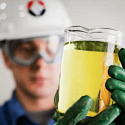
Aqua Solutions, a worldwide provider of affordable laboratory water systems, has announced that it will be exhibiting its full line of products for laboratory, analytical and biological water purification at Pittcon 2013.

U.S. Bureau of Reclamation to grant up to $400,000 for water purification research
Written by Nicholas PappThe Technical Services Center of the U.S. Bureau of Reclamation (USBR) recently solicited desalination and water purification research pre-proposals for the Desalination and Water Purification Research & Development (DWPR) Program. The Reclamation said it would provide funding opportunities up to $150,000 for the research and laboratory studies, and another $400,000 for the pilot scale projects.
When the CDC recently built a new 10-story R&D facility, they made a great discovery! They discovered they could save some big money by eliminating the central DI lab water purification system and installing 80 compact, combination Reverse Osmosis + Type I DI systems instead! They saved big on capital, plumbing installation, and operating costs. And now, they're saving big on maintenance costs!
Tips on Buying a Lab Water Purification System
Written by Nicholas Papp1.Silence is golden - but make sure the system runs 24/7. Noise does not purify water! The Type I System you buy should have a pump that continuously and silently recirculates water 24 hours a day, 7 days a week. Don’t be fooled by intermittent recirculation. It could be a ploy to cover up noisy pumps that were never intended to operate continuously, or pumps that heat up the water.
The RO+DI system can produce better quality water, at lower cost, than systems without built-in RO pretreatment. This laboratory water purification system is ideally suited for applications where the existing central RO, DI or distillation pretreatment system is either unreliable, overloaded (with regard to capacity), or nonexistent in a particular location.It is also suitable for applications where either space or funding limitations preclude purchasing separate RO and Type I DI systems.
It is difficult to measure the pH of type I ultra-pure water. It rapidly picks up contaminants that affect its pH and it has a low conductance, which causes instability in most pH meters unless they are specifically designed to work in ultra-pure water.
Which Type of Reagent Grade Water do I Need?
Written by Nicholas PappWhile many analytical procedures and instruments specify the type of reagent grade water that is needed (i.e., Type I, Type II, Type III or Type IV), just as many do not. As a “rule of thumb”, Type I Ultrapure water contains dissolved solids at the level of “a few parts per billion”, while Type II and Type III water contains dissolved solids at the level of about “1/ 8 to 1/2 part per million”, and Type IV water contains about 2.5 parts per million of dissolved solids.